ADVERTISEMENT
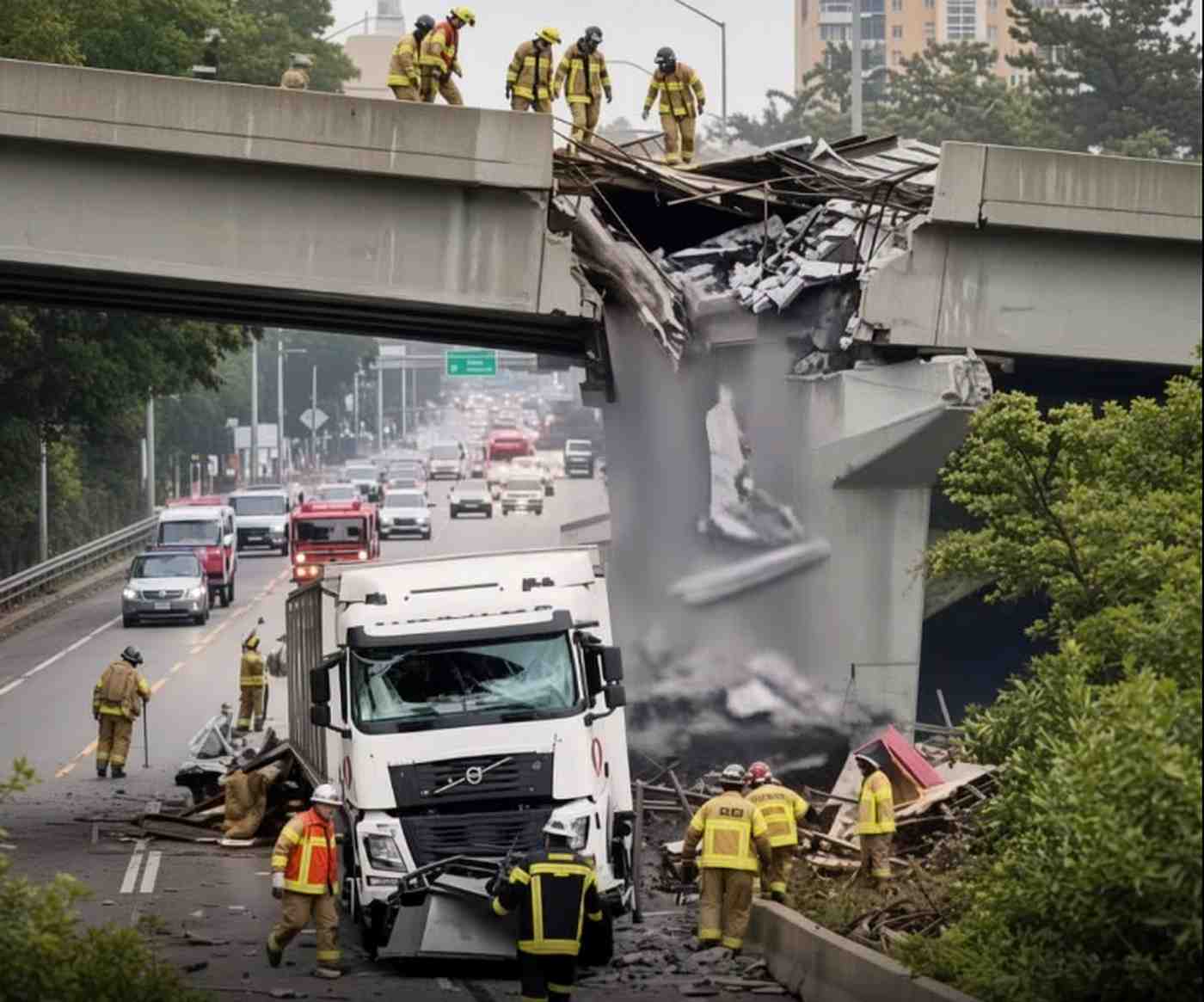
The City of Richmond confirmed that while the section of highway falls under provincial jurisdiction, municipal engineers joined the investigation to support the Ministry of Transportation and Infrastructure. Their goal was to determine whether the bridge could safely handle traffic loads after the collision.
The Richmond Road Safety Unit (RSU) has taken over the investigation, working closely with the provincial ministry to conduct a detailed structural and engineering review. Their examination includes checking for cracks, joint displacement, or weakened support beams caused by the impact.
A recurring issue in British Columbia
Last year, a similar crash occurred in Langley, marking the eighth such collision on provincial highways in a single year. These accidents often share a common cause: raised truck beds, improperly measured loads, or inadequate awareness of height restrictions.
While driver error remains a significant factor, industry experts stress that the problem also reflects aging infrastructure and inconsistent signage. The province’s database of bridge and overpass strikes cites several incidents in which clearance signs were missing or inaccurate, or where resurfacing work reduced the vertical clearance available to passing vehicles.
The British Columbia Trucking Association (BCTA) has urged authorities to adopt a more comprehensive safety approach. The organization argues that technology such as over-height detection systems—using laser or infrared sensors—should be installed at key locations to warn drivers before reaching low overpasses.
ADVERTISEMENT
